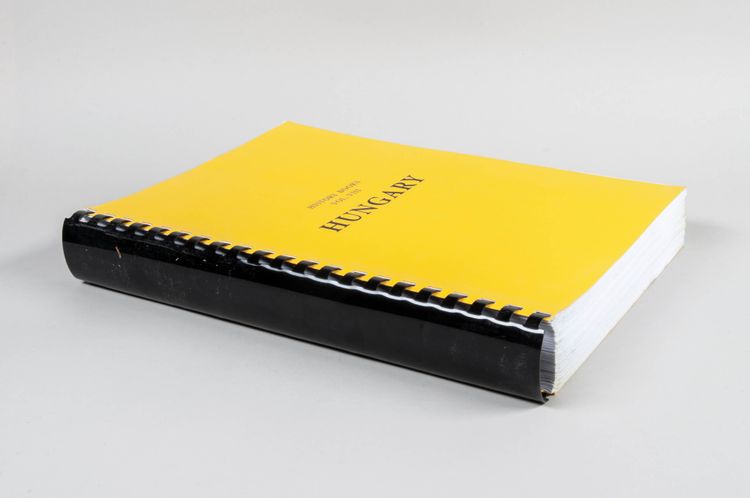
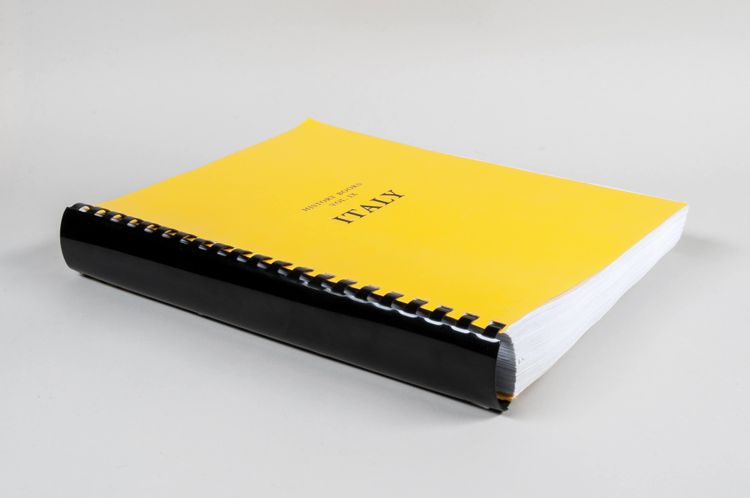
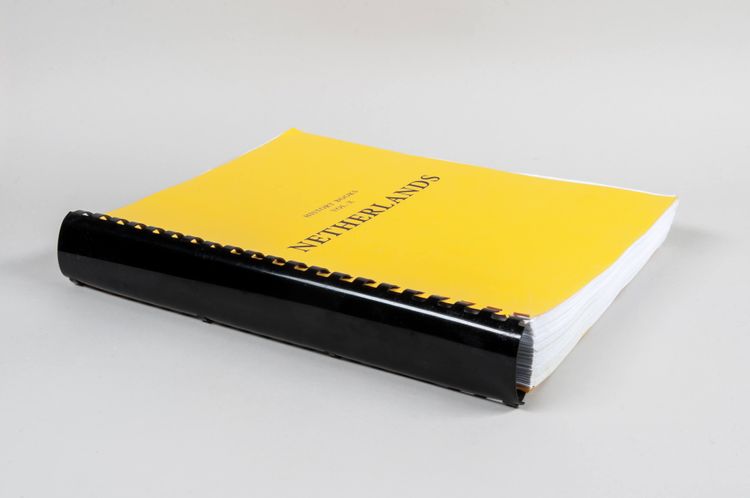
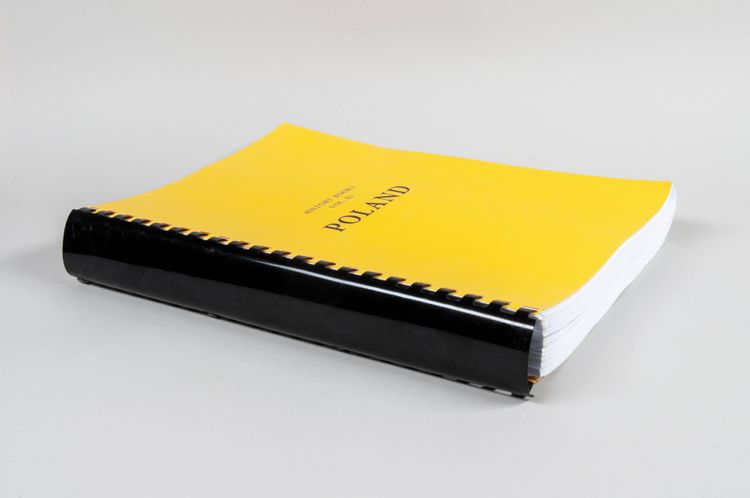
“Installed as a public reference resource, Hate Library explores the language of far-right political groups and parties across contemporary Europe. It focuses on their use of online forums as recruiting and collaboration tools in a changing political region where transnational allegiances are bolstering extreme nationalist agendas. […] It also juxtaposes the often confusing overlaps between public (front stage) and online activist (back stage) political discourses” (Nick Thurston, “Hate Library,” website). This interplay “between networked activism beneath the surface of life and its effects on the surface of lived experience” is also reflected in the punning slogan of the exhibition poster “Back to Front Truth” (Nick Thurston, “Back to Front Truths,” 199).
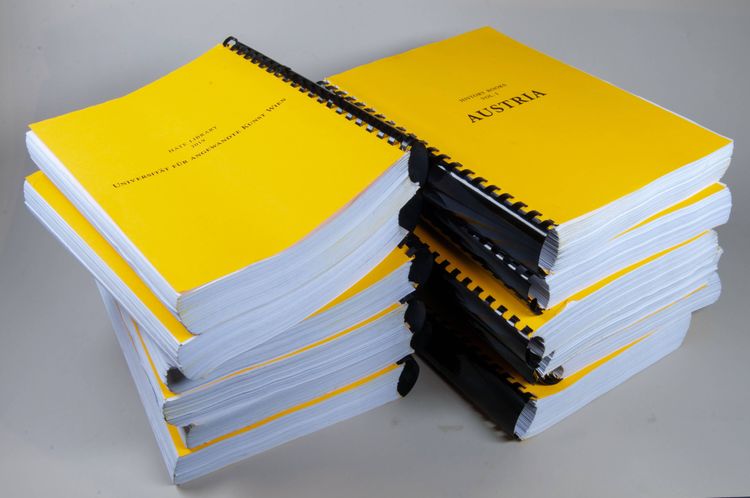
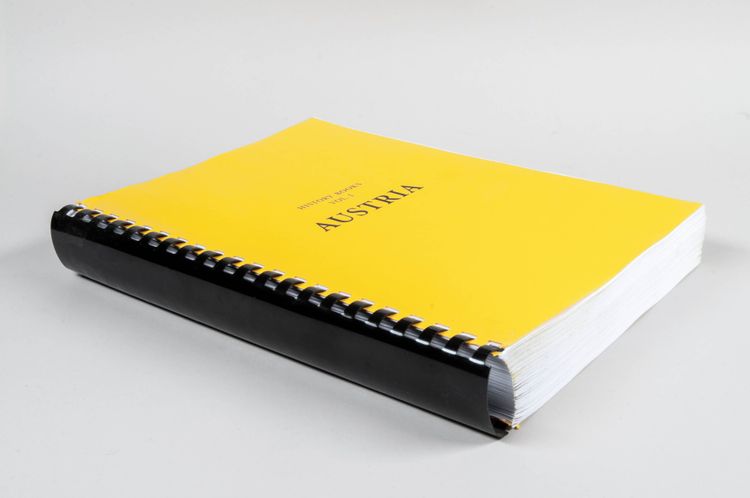
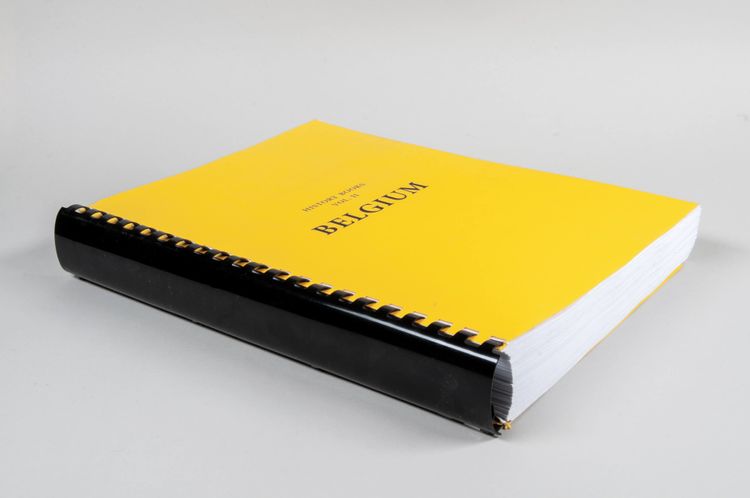
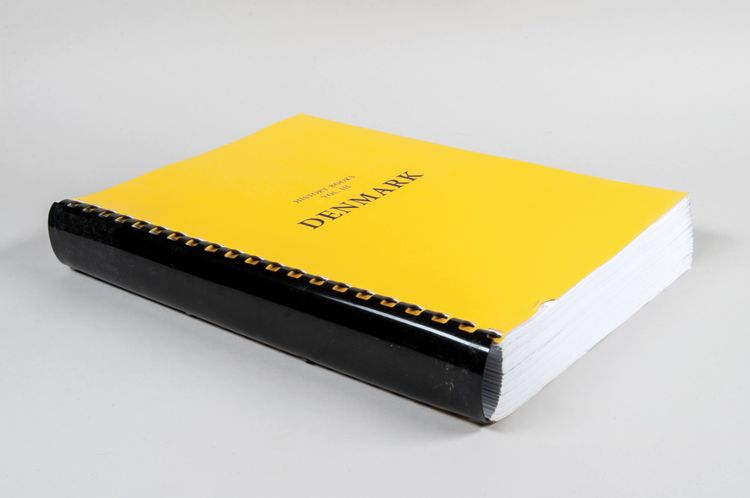
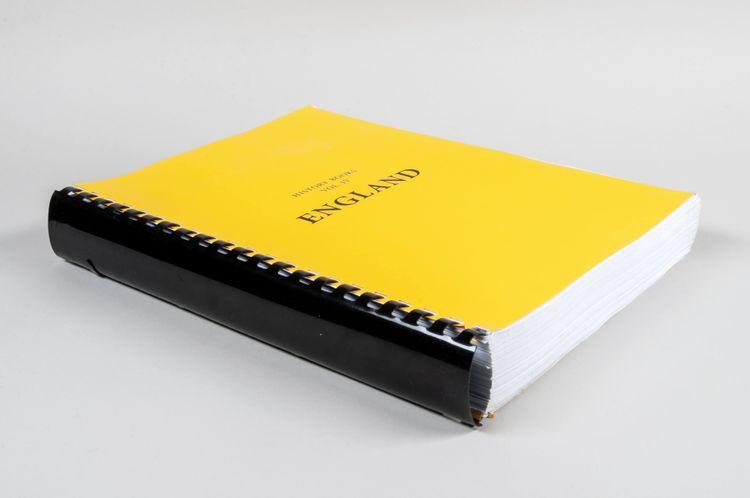
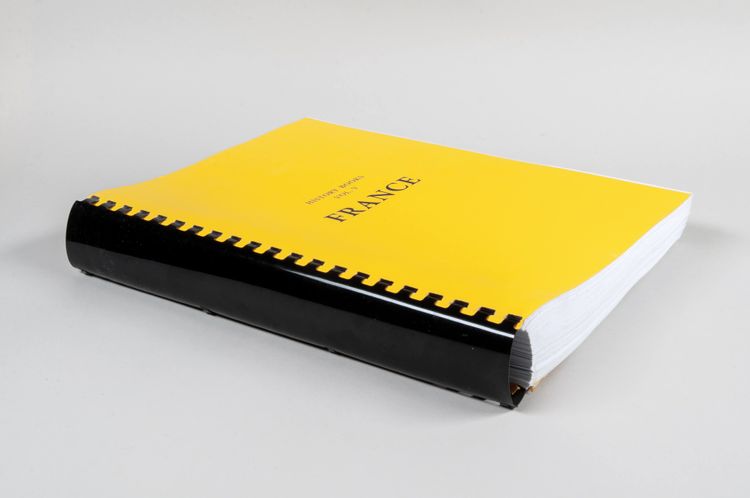
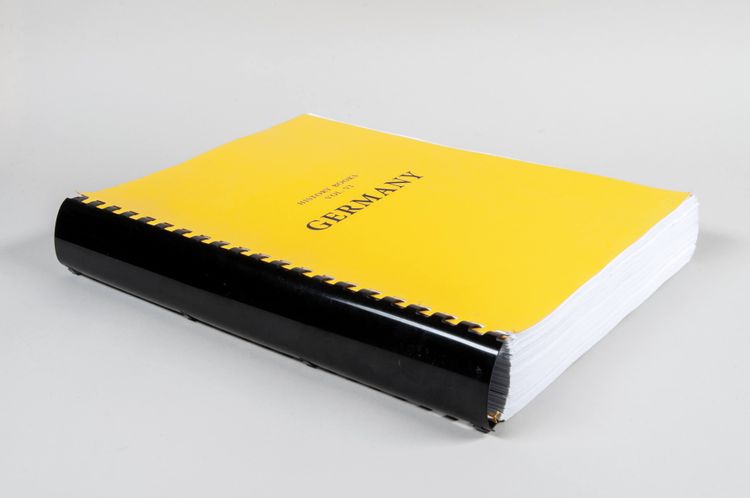
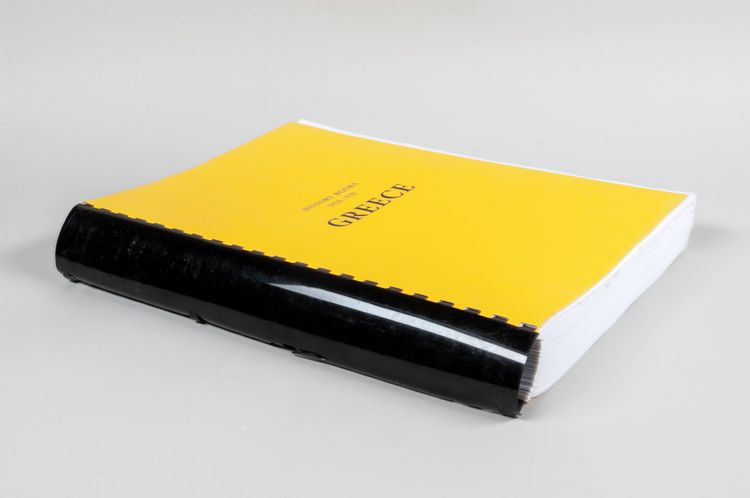
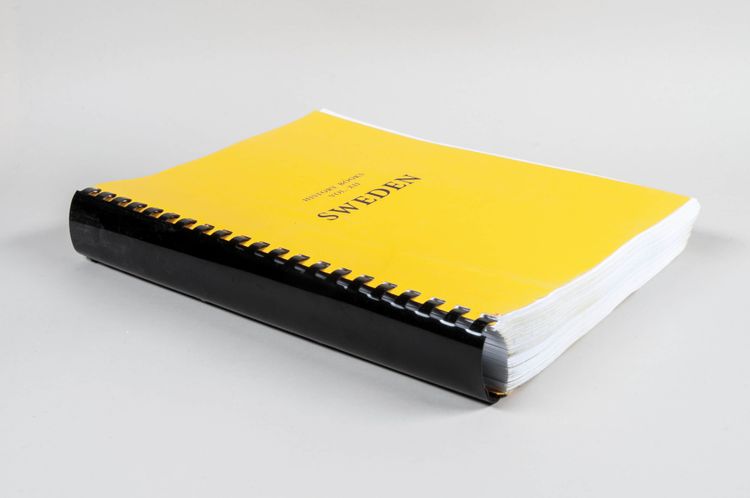
The material from the online far-right supporter forums was transferred into twelve volumes arranged by country: Vol. 1: Austria; Vol. 2: Belgium; Vol. 3: Denmark; Vol. 4: England; Vol. 5: France; Vol. 6: Germany; Vol. 7: Greece; Vol. 8: Hungary; Vol. 9: Italy; Vol. 10: Netherlands; Vol. 11: Poland; Vol. 12: Sweden. They were presented as “history books” on blue music stands, arranged in a circle on the yellow stars of the European flag, inviting collective, “choral” reading: “Each of these unedited volumes pauses one far-right national conversation, repeating it offline by using simple data-gathering and print-on-demand processes” (Nick Thurston, “Back to Front Truths,” 202). They are encircled by panels presenting the search results of “truth” in the European sections of the world’s largest white supremacist platform Stormfront. In addition, the walls are plastered with oversized thread titles.
Nick Thurston, through the exhibition’s title Hate Library, declares this setting to be a public library that recontextualizes these kinds of “backstage” discussions that, despite their public accessibility, “do not seem to have become public knowledge in any strong sense of that phrase,“ and makes them “accessible to audiences who would never enter those online bubbles” (Nick Thurston, “Back to Front Truths,” 203 and 194). At the same time, Thurston probes an artistic approach through which documents like these “can become matters of public concern through their ‘social life’—through re-publishing, sharing, and discussing them” (Nick Thurston, “Document Practices”).
Developed in collaboration with historian Matthew Feldman, Hate Library was shown in Thurston’s solo exhibition of the same name at Galeria Foksal (Warsaw, June–July 2017), at transmediale (Berlin, January– February 2018), at the University of Applied Arts (Vienna, June 2019) and Hartware MedienKunstVerein (Dortmund, April–September 2019), for which a new set was printed each time. Our set is the one produced for Vienna. In some cases, without the artist’s knowledge, the venues disposed of the used books after the show.