Anti-Sonnets is a long-term project that began in 2017, when Mark Staniforth set out to write a sonnet every day for a year, “irrespective of personal circumstance. Each sonnet’s subject matter, and perhaps also the perceived quality of its artistic execution, would reflect the tribulations of daily life” (blurb on Lulu).
With the sonnet, Staniforth chooses one of the most traditional genres in the history of European literature, which is at the same time considered the most stringent of all literary forms. That not only results in a faithful and mechanical compliance with norms but has also steadily provoked experiments and deviance. Thus, the genre has been put through every conceivable test in the course of literary history and accompanied by “anti-sonnets” from the very beginning. Standing in this tradition, Staniforth also makes it his task “to challenge assumptions associated with the sonnet form, and to champion the ascendency of context over content” (blurb on Lulu).
The series features a wide range of conceptual writing approaches. At the same time, it fans out into subseries that consistently play through a certain idea. The conceptual setting of this publishing project also implies a shift in scale, which is closely linked to the possibilities of print-on-demand publishing. In this new perception, a publication is understood as a poem, thus, a text turning into a line of poetry and a series of publications sometimes forming a poem-cycle. All publications are numbered with roman numerals and documented on a blog.
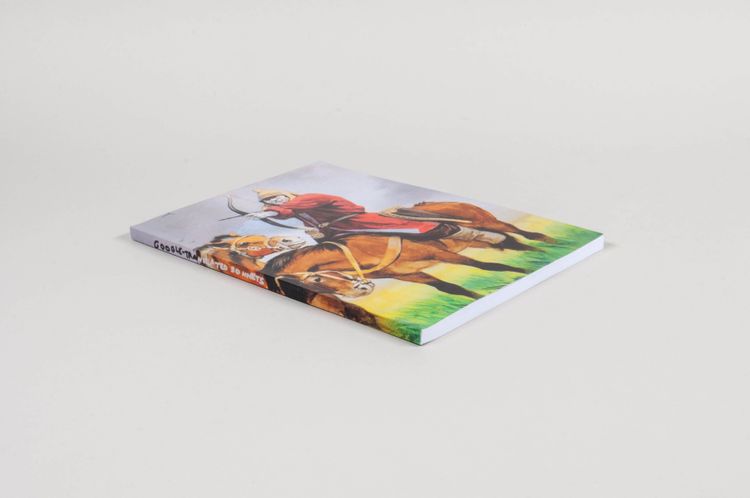
GOOGLE-TRANSLATED SONNETS is a collection of poems conceived by translating Shakespeare’s Sonnet 130 into one of Google Translate’s 103 languages at the time and then translating it back into English. The result is a documentation of the software’s state of development as well as a visualization of cultural differences that are transported via these languages, with the resulting poems showing significant differences and poetic “misunderstandings.”
By making one of the most canonical poems of the English language the point of reference for this project, GOOGLE-TRANSLATED SONNETS mirrors the colonialist bias of the translation software, which is programmed and maintained by a US software giant. To underline this, the cover depicts what looks to be Mongol warriors on horses capturing an English knight on foot.
GOOGLE-TRANSLATED SONNETS is part 137 of Staniforth’s Anti-Sonnets.
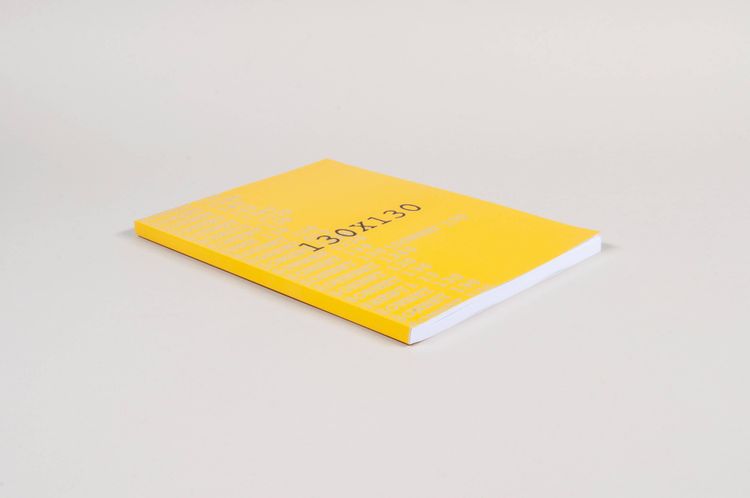
For 130X130, Staniforth typed Shakespeare’s Sonnet 130 consecutively 130 times without editing, leaving in all errors, deviations, and transformations. The transcriptions, which show far less errors than one would expect from such an exhaustive exercise, demonstrate the performative and poetic power a body exerts on a text through the mere act of typing.
130X130 is part 157 of Staniforth’s Anti-Sonnets.
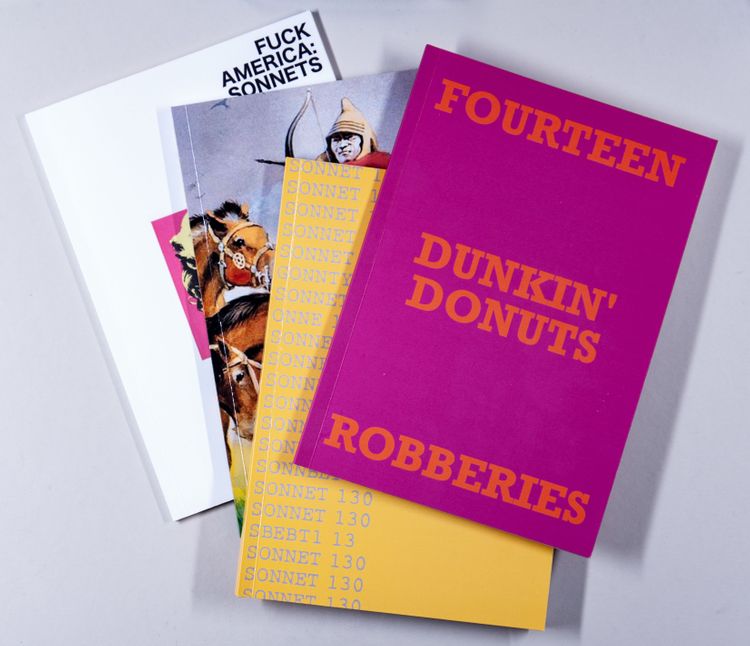
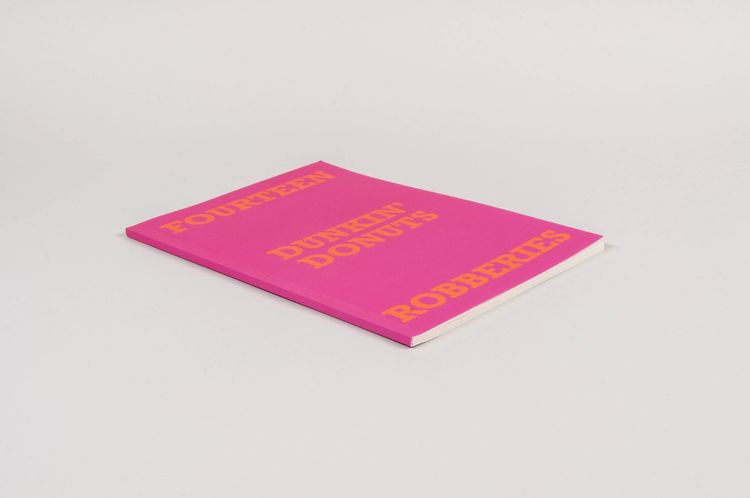
Fast Food Robberies is a fourteen-piece subseries situated within Staniforth’s long-term project Anti-Sonnets and can be conceived as a sonnet in itself, in which each of the fourteen publications forms a verse, so to speak. Since each publication in turn contains fourteen sonnets, the subseries can also be described as a sonnet cycle. This illustrates the shift in scale: from lines of poetry to collections of texts, from a single volume to a series, which forms the conceptual basis of this publishing project.
Each publication of this series features fourteen news articles on robberies that took place in different fast-food restaurants in the US, offering “an up-to-date portrait of US society through the prism of two of its most enduring obsessions: food and guns” (blurb on Lulu). The covers mimic the design of Edward Ruscha’s famous Twentysix Gasoline Stations, but with a different color set for each volume, featuring one of the fourteen following fast-food restaurants: Baskin-Robbins, Carl’s Jr, Chick-Fil-A, Chipotle, Dairy Queen, Dunkin’ Donuts, In-NOut Burger, Krispy Kreme, Papa John’s, Popeyes, Taco Bell, Wendy’s, Whataburger, Wingstop.
Fuck America: Sonnets is a collection of fifty poems, one for each US state in alphabetical order. Each poem consists of fourteen lines in the style of a sonnet, each of them repeating the word “Fuck” followed by a name or word that the author deems important or representative of the state. These usually include important cultural figures like artists, authors, or musicians but also names of well-known places, and references to popular culture and consumerism. By this, Fuck America: Sonnets creates an inventory of cultural markers and “exposes the stereotypes that make America simultaneously so alluring and appalling,” the author writes in the blurb on Lulu, while at the same time “ask[ing] if we are all implicit in perpetuating them.”
The book also makes explicit use of the possibilities offered by print-on-demand platforms as it comes in a choice of fourteen different covers, each depicting a different icon of American popular culture, including Jasper Johns’ Flag, William Perry (“the Refrigerator”), Elvis, Warhol, Aretha, Bodacious, Fatburger, Tonya Harding, Mountain Dew, ZZ Top, Anna Nicole, L’il Wayne, Key Lime Pie, and Bridget The Midget. Thus, this fourteen-part cover series forms a sonnet itself.
